
Bridging the European Logistics Gap: The Next Chapter of Global Service Integration
10/6/20252 min read
Overview
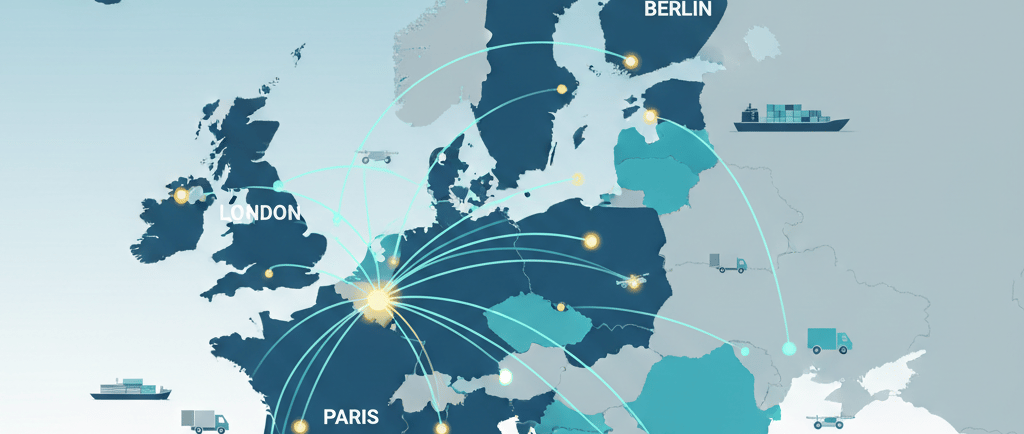
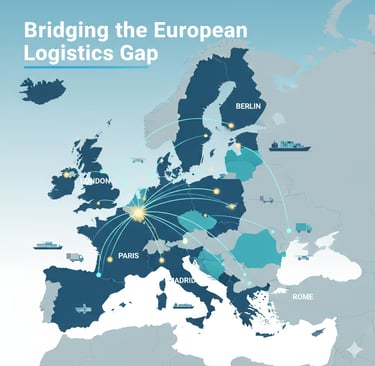
Europe’s logistics and delivery industry remains one of the most intricate networks in the world — connecting manufacturers, retailers, and end customers across more than 40 diverse markets. Despite technological progress, the ecosystem continues to face persistent challenges in cross-border coordination, digital transparency, and real-time vendor reliability.
While large carriers dominate long-haul routes, mid-sized and local delivery firms struggle to gain visibility across the continent. This imbalance limits competition, increases cost per shipment, and slows innovation.
The Real Challenge
Fragmented Provider Landscape:
Thousands of local logistics firms operate efficiently within national borders, but few can connect internationally due to the absence of unified digital infrastructure.Uneven Data Access:
European logistics data — such as shipping costs, customs trends, and delivery performance — is often scattered, costly, or locked behind private enterprise systems.Cross-Border Integration Gaps:
SMEs (Small and Medium Enterprises) frequently find it difficult to locate reliable partners across borders, especially when handling multi-country supply chains or last-mile delivery.
The Market Insight
According to the European Commission (2024), cross-border e-commerce in Europe grew by over 17% last year. However, more than 60% of small logistics providers reported difficulty in expanding their network outside their own country — primarily due to data visibility and lack of digital collaboration tools.
(Source: European Logistics Market Outlook 2024, EC Mobility Data Unit.)
How Vox Meridian Addresses This
At its current stage, Vox Meridian is focused on building a unified service ecosystem — connecting verified logistics and delivery providers under one global framework.
Key real-world contributions include:
Centralized provider registration for logistics and delivery companies.
Structured B2B categorization enabling firms to discover verified partners across borders.
Transparent business visibility through professional listing profiles.
These steps lay the foundation for a trust-based logistics network that European businesses can rely on for scalability and partnership building.
Vision for the Future
While Vox Meridian currently serves as a connection and verification hub, its long-term roadmap includes exploring:
Cross-border collaboration tools (for direct vendor-to-vendor communication)
Data-driven logistics insights (to improve cost efficiency and route optimization)
Regional integration dashboards (for better transparency and market analysis)
These features are not yet implemented, but they represent the natural next evolution of Vox Meridian’s mission — to strengthen global service cooperation starting from verified relationships.
Conclusion
Europe’s logistics transformation depends not only on technology but on trust, connection, and visibility.
Vox Meridian’s step-by-step approach — focusing first on verification and network building — ensures a sustainable and scalable path forward.
What begins as a service listing platform today, may soon evolve into a data-connected global logistics ecosystem tomorrow.
References:
European Logistics Market Outlook 2024 – European Commission Mobility Data Unit
Eurostat Transport Statistics Report 2023
Deloitte Global Freight Digitalization Study 2024